Molokhia
Molokhia: Egypt's Ancient Leaf Vegetable, From Pharaonic Tables to Global Export
July 31, 2026 · 10 min read
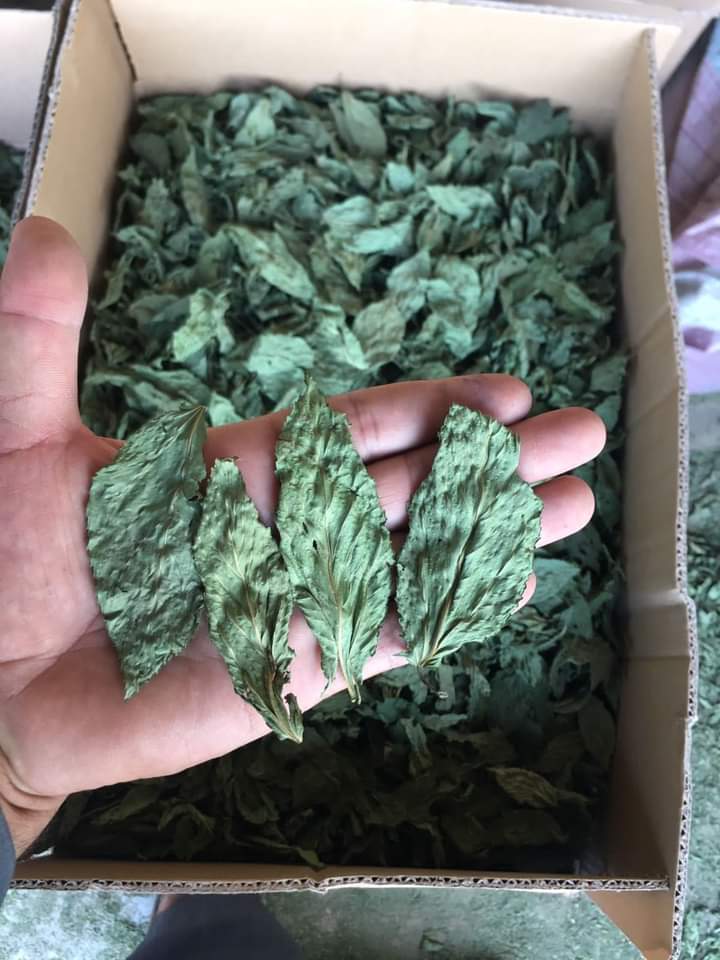
Few leaf vegetables carry as much cultural weight in Egypt as molokhia. It's been eaten in the country since antiquity, mentioned by Roman naturalist Pliny the Elder, and remains a fixture on Egyptian tables today — while, under different names, it's also central to dishes from West Africa to Vietnam to the Philippines. This guide covers what molokhia actually is, its long history, and what buyers should know about sourcing it.
What Is Molokhia?
Corchorus olitorius, commonly known as jute mallow or molokhia, belongs to the mallow family (Malvaceae) and is unusual among crops in serving both as a food and as a fiber source. The herbaceous annual plant typically reaches about 1.5 meters in height (fiber-focused varieties can grow taller), with serrate leaves 6–10 centimeters long and small yellow flowers that develop into spindle-shaped seed pods. The plant shares fiber-crop duties with a close relative, Corchorus capsularis, though molokhia's fiber is generally considered the lower-quality of the two for textile use — it's molokhia's leaves, not its fiber, that matter for the food trade this guide covers.
Ancient Roots
Molokhia's exact botanical origin is debated among researchers — some point to an Indo-Burmese origin, others to Africa — but its culinary history in Egypt is exceptionally well documented. The Roman naturalist Pliny the Elder recorded its use in ancient Egypt, and some scholars have suggested that Jewish cultivation of the plant in the Near East influenced its English common name, "Jew's mallow." Whatever its precise origin, molokhia's presence at the Egyptian table spans millennia rather than centuries.
Molokhia Around the World
The same plant appears under strikingly different names and preparations across cultures. In Egypt, Sudan, and Palestine, it's cooked into the dish most people mean when they say "molokhia" or "mulukhiyah" — boiled leaves, typically served with rice or bread. Vietnamese cooks prepare it as rau đay, often in a shrimp soup. In Nigeria and Zambia, the leaves become a sticky, mucilaginous sauce served alongside cassava or nshima. In the Philippines, it's known as saluyot and appears in soups like Dinengdeng and Bulanglang. Tunisian cooking incorporates powdered molokhia leaves into dishes with beef or lamb, and the Bodo people of northeast India prepare narji, combining dried molokhia leaves with fatty pork.
Nutritional Profile
Molokhia leaves are notably nutrient-dense, containing meaningful levels of protein, fiber, calcium, potassium, iron, and phosphorus, along with beta-carotene, thiamine, riboflavin, niacin, and vitamin C. This nutritional density is part of why the leaf vegetable has remained agriculturally and dietarily significant in regions where diets can otherwise lean heavily on micronutrient-poor staple crops. As with any food-grade botanical, it's worth being clear that this reflects its nutritional composition rather than a medical claim — molokhia is a vegetable with a long culinary history, not a treatment for any condition, and nothing here should be read as medical advice.
Where Molokhia Is Grown
Beyond Egypt, molokhia is cultivated across North Africa (Tunisia, Sudan), the Levant (Syria, Lebanon, Palestine), Sub-Saharan Africa (Nigeria, Ghana, Benin, Uganda, Kenya, Zambia, Zimbabwe), and parts of Asia (Bangladesh, India, Japan, China), as well as in the Caribbean and Brazil. The plant favors warm lowland tropical conditions, tolerating a wide rainfall range but growing best around 1,000 millimeters of annual precipitation and temperatures between roughly 17–28°C — conditions that describe much of Egypt's growing regions well.
How Dried Molokhia Is Processed for Export
For export, molokhia leaves are harvested, cleaned, and dried — either sun-dried on clean surfaces or using forced-air drying — then sorted to remove stems and any foreign material before being cut, sifted to a consistent particle size, and packed. Buyers typically want a consistently green color and fine, uniform texture, since both directly affect how the dried product reconstitutes when cooked.
Storage
Dried molokhia should be kept in a cool, dry, airtight environment away from direct light, which preserves its green color and flavor for up to a year or more. Exposure to humidity is the main quality risk, since it can promote clumping and mold in a dried leafy product like this.
Whole Leaf vs. Powdered Molokhia
Buyers can source dried molokhia as whole cut leaves or as a finer powder, and the choice generally comes down to end use. Restaurants and home cooks preparing the traditional soup typically want cut leaf that reconstitutes properly when cooked into the classic mucilaginous texture, while food manufacturers incorporating molokhia into packaged products or supplement formulations more often prefer powder for easier, more consistent blending. Particle size consistency matters more than most buyers initially expect, since uneven cutting can lead to an inconsistent texture in the finished dish.
Comparing Molokhia Suppliers: What to Look For
Since molokhia quality is judged heavily on color, particle consistency, and how well it reconstitutes when cooked, it's worth asking prospective suppliers for a sample before committing to a bulk order rather than relying on a written specification alone. Also worth comparing: drying method (low-heat or shade-drying generally preserves color and flavor better than high-heat drying), harvest freshness, and whether lab testing for microbial load is standard practice.
Molokhia's Place in Modern Egyptian Food Culture
Despite its ancient roots, molokhia remains a genuinely everyday dish in Egypt rather than a nostalgic or ceremonial one — it's common home cooking, served across income levels and regions, and remains one of the most searched-for and requested Egyptian dishes among the diaspora abroad. This everyday relevance is part of why dried molokhia has a reliable, consistent export market: demand isn't tied to a seasonal festival or niche culinary trend, but to a dish that's cooked in Egyptian homes on an ordinary weekly basis, both domestically and among Egyptian communities living abroad who rely on imported dried molokhia when fresh leaves aren't available.
Fresh vs. Dried Molokhia for Export
Fresh molokhia leaves are highly perishable and realistically only suited to local or very short-distance markets, which is exactly the gap dried molokhia fills for international buyers. Drying converts a delicate fresh green into a stable, easily shipped commodity that can be stored and used well outside the fresh harvest season, without the cold-chain logistics fresh leaves would require. For most export buyers — particularly those supplying Egyptian and Middle Eastern grocery markets abroad — dried, cut molokhia is the only practical form to source at scale.
Preparing Dried Molokhia: What Buyers' Customers Should Expect
Unlike some dried herbs that simply rehydrate in hot water, dried molokhia is traditionally finely chopped or ground before cooking, then simmered in broth where it develops the dish's signature mucilaginous, almost silky texture — a texture some newcomers find unusual but that's central to the dish's appeal for those who grew up with it. This is worth mentioning to buyers stocking the product for markets less familiar with molokhia, since packaging or marketing that explains this expected texture can reduce customer confusion compared to treating it like a standard leafy green.
Documentation Buyers Should Expect for Export Shipments
International molokhia buyers should expect a standard set of export documentation: a certificate of origin, a phytosanitary certificate meeting the destination country's plant health requirements, a commercial invoice and packing list detailing exact grades and quantities, and organic certification paperwork where relevant. Suppliers who can't produce this documentation promptly, or who seem unfamiliar with a given destination market's import requirements, are worth treating cautiously before committing to a larger order.
Sourcing Bulk Molokhia From Egypt
For buyers sourcing molokhia, Egypt's centuries of cultivation experience translate into practical advantages: established processing infrastructure, consistent grading practices, and suppliers accustomed to export documentation requirements. Explore our current molokhia offering, browse our full product catalog, or visit our contact page to request a quote or sample.
Related Pages
Frequently Asked Questions
What is molokhia, exactly?
Molokhia (Corchorus olitorius), also called jute mallow, is a leaf vegetable in the mallow family with a long culinary history in Egypt and beyond. The dried, cut leaves are used to make a distinctive mucilaginous soup or sauce.
Why is molokhia sometimes called 'Jew's mallow' in English?
Some scholars trace the name to historical Jewish cultivation of the plant in the Near East, though molokhia's cultivation and consumption span many cultures and long predate any single group's association with it.
How is molokhia used outside Egypt?
Under different names, it appears widely: rau đay in Vietnamese shrimp soup, saluyot in Filipino soups, a mucilaginous sauce in Nigerian and Zambian cooking, and narji among the Bodo people of northeast India, among others.
How should dried molokhia be stored?
In a cool, dry, airtight environment away from direct light, which preserves color and flavor for up to a year or more. Humidity is the main quality risk for a dried leafy product like this.
Is Egyptian molokhia organic?
We offer both conventionally grown and certified organic molokhia, depending on harvest and buyer requirements. Ask our team for current organic certification availability.
What should I look for in export-grade dried molokhia?
Consistent green color, fine and uniform particle size after cutting and sifting, low moisture content, and minimal stem or foreign material — all of which affect how well the product reconstitutes when cooked.
Can I request a sample before a bulk order?
Yes. We regularly send samples to prospective buyers for quality evaluation before committing to a full order.
What packaging options are available for bulk molokhia?
We offer kraft bags, PP woven bags, and jute bags depending on order size. See our packaging page for details.
Is molokhia nutritionally significant?
Yes — it's notably rich in protein, fiber, calcium, potassium, iron, and several vitamins. This reflects its nutritional composition as a food-grade vegetable, not a medical claim.
How old is molokhia cultivation in Egypt?
Its presence at the Egyptian table spans millennia; the Roman naturalist Pliny the Elder documented its use in ancient Egypt, making it one of the country's longest-standing culinary staples.
Why is dried molokhia preferred over fresh for export?
Fresh molokhia leaves are highly perishable and realistically only suited to local markets. Drying converts it into a stable, easily shipped commodity that can be stored and used well outside the fresh harvest season without cold-chain logistics.
What texture should I expect from cooked molokhia?
Dried molokhia is traditionally finely chopped or ground before simmering, developing the dish's signature mucilaginous, silky texture — a texture that's central to the dish's appeal but can be unexpected for those trying it for the first time.