Thyme
Thyme: From Ancient Egyptian Embalming to Modern Export Sacks
July 31, 2026 · 10 min read
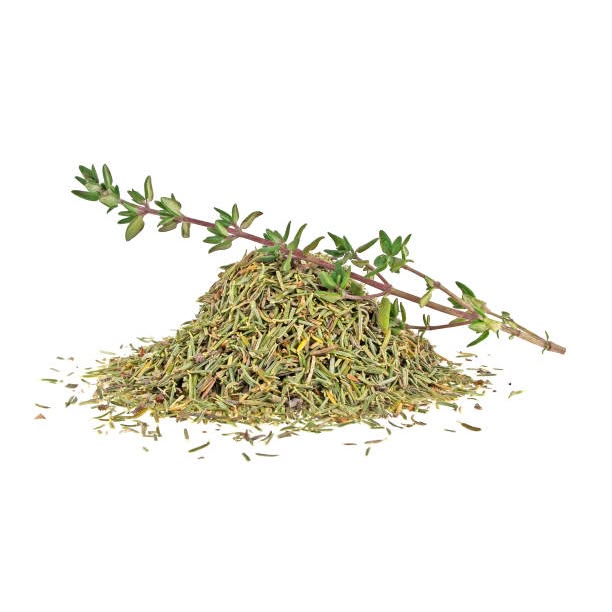
Thyme is one of the rare herbs that has held a place in human life for thousands of years without ever really going out of fashion — used in ancient embalming, medieval bedtime rituals, and modern kitchens and mouthwash bottles alike. This guide covers what thyme actually is, why it's held in such long-standing regard, and what buyers should know when sourcing it from Egypt.
What Is Thyme?
Thyme refers to the dried aerial parts (leaves and flowering tops) of plants in the genus Thymus, part of the mint family (Lamiaceae). Thymus vulgaris, or common thyme, is the most widely cultivated culinary variety and is native to Southeast Europe, though thyme more broadly is indigenous across North Africa, the Levant, and Southern Europe — a range that puts Egypt squarely within its natural growing region rather than requiring the plant to be introduced from elsewhere.
A History Spanning Millennia
Thyme's cultural footprint runs deep. Ancient Egyptians used common thyme in embalming, while the ancient Greeks burned it as incense in temples and used it in their baths. During the European Middle Ages, people placed thyme beneath pillows believing it would aid sleep and ward off nightmares, and women reportedly gave sprigs of thyme to knights as a symbol meant to bring courage to the bearer. Even the fish genus Thymallus — the grayling — takes its name from thyme, due to the fish's faint thyme-like scent.
What's Inside Thyme
Thyme's aroma and much of its traditional reputation come from thymol, its principal aromatic compound, present at meaningful concentration in the essential oil alongside carvacrol, linalool, and 1,8-cineole. Thymol has a long history of use as an antiseptic in traditional medicine, and it remains a recognizable active ingredient in commercial products today — it's one of the active ingredients in Listerine mouthwash, a fairly direct link between an ancient herb and a modern drugstore shelf. Thyme also contains flavonoids such as luteolin-7-O-glucoside, phenolic acids including rosmarinic acid, and triterpenes like oleanolic and ursolic acid, all contributing to its antioxidant properties.
Growing Thyme in Egypt
Thyme thrives in hot, sunny locations with well-drained soil and tolerates drought well — conditions that describe much of Egypt's growing regions closely. It's typically planted in spring and grows as a perennial thereafter, propagated from seed, cuttings, or by dividing established plants. This resilience to dry conditions is part of why thyme remains a practical, low-input crop for many Egyptian growers compared to more water-demanding herbs.
Thyme vs. Za'atar: A Common Point of Confusion
Buyers new to Middle Eastern and North African botanicals sometimes conflate thyme and za'atar, and the confusion is understandable — za'atar in this region often refers to a specific wild thyme variety as well as to the popular spice blend built around it (typically combining dried thyme, sumac, sesame seeds, and salt). We export both as distinct products: standard cultivated thyme and a separate wild Egyptian za'atar offering, and it's worth specifying which one you actually need when requesting a quote, since growing conditions, harvest timing, and pricing can differ between the two.
Culinary and Household Uses
Thyme is a core component of French bouquet garni and herbes de Provence blends, and it appears across Mediterranean, Middle Eastern, and North African cooking more broadly. It's sold both fresh — typically in bunches of short sprigs — and dried; dried thyme actually retains its flavor on drying better than many other herbs, which is part of why it travels and stores so well for export compared to more fragile leafy herbs.
Grading and Storage
Export-grade dried thyme is graded on leaf-to-stem ratio (a higher proportion of leaf relative to woody stem is generally more valuable), color (a vibrant green indicates careful, low-heat drying), and aroma strength. Store dried thyme in a cool, dark, dry place in airtight packaging; kept this way, it retains good flavor for 1–2 years, though — as with any dried herb — flavor intensity gradually fades well before the product becomes unsafe to use.
Thyme's Role in Egyptian Agriculture
Thyme is grown alongside other Mediterranean-native herbs in Egypt's herb-farming regions, often as part of a broader crop rotation that includes plants with similar water requirements and harvest windows, such as marjoram and rosemary. Its drought tolerance makes it a comparatively low-input, low-risk crop for growers working in Egypt's drier agricultural zones, and steady international demand for dried culinary herbs provides a reliable export market that supports continued cultivation season after season.
Comparing Thyme Suppliers: What to Look For
Because dried thyme is traded at a wide range of price points globally, it's worth comparing prospective suppliers on specifics rather than price alone: leaf-to-stem ratio guarantees, whether lab testing for microbial load and pesticide residue is standard or only offered on request, and harvest freshness, since older stock generally carries a weaker aroma even if it looks visually similar to a fresher batch. A transparent supplier should be willing to discuss all of these directly rather than relying on vague quality claims.
Thyme's Traditional Reputation as an Antiseptic
Thyme's antiseptic reputation is genuinely old — the ancient Greeks used it as incense in a context tied to purification, and folk medicine across the Mediterranean has employed thyme preparations for a very long time. Thymol's inclusion in a mainstream product like Listerine reflects a real, documented antiseptic property of the compound rather than pure folklore, which makes thyme a somewhat unusual case among traditional herbs where a specific traditional use has carried through into a widely recognized modern commercial application. That said, this reflects the properties of concentrated thymol in a formulated product, not a claim about raw dried thyme leaf itself, and nothing here should be read as medical advice for the herb as sold in bulk.
Thyme Varieties Worth Knowing
Beyond common thyme, several other Thymus species and cultivars show up in specialty markets. Thymus citriodorus covers a group of lemon, orange, and lime thyme varieties with citrus-inflected aromas alongside the standard thyme character. Thymus herba-barona, or caraway thyme, carries a distinctly different scent thanks to the compound carvone, giving it a caraway-like note rather than a purely herbal one. Thymus serpyllum, or wild thyme, grows across Southern Europe and North Africa and serves as an important nectar source for honeybees, in addition to its culinary and traditional uses. Our standard export product is common thyme (Thymus vulgaris), but buyers with specialty requirements are welcome to inquire about availability of other varieties.
Thyme Honey: A Related Product Worth Mentioning
In regions where wild thyme grows abundantly, particularly around the Mediterranean, thyme honey — produced by bees foraging primarily on thyme flowers — is a distinct, well-regarded product in its own right, prized for its aromatic, slightly medicinal flavor profile compared to more neutral honey varieties. While honey isn't a product we export, it's a useful example of how thyme's influence extends into adjacent agricultural products beyond the dried herb itself.
Documentation Buyers Should Expect for Export Shipments
International thyme buyers should expect a standard package of export paperwork alongside product-specific quality documentation: a certificate of origin, a phytosanitary certificate confirming compliance with the destination country's plant health requirements, a commercial invoice and packing list with exact grades and quantities, and organic certification documentation where relevant. Suppliers unfamiliar with a given destination market's import requirements, or unable to produce this paperwork promptly, are worth treating cautiously before committing to a larger order.
Sourcing Bulk Thyme From Egypt
For buyers sourcing thyme at scale, ask suppliers about leaf-to-stem ratio guarantees, lab testing for microbial load and pesticide residue, and consistent grading between shipments. Explore our current thyme offering, browse our full product catalog, or visit our contact page to request a quote or sample.
Related Pages
Frequently Asked Questions
What's the difference between thyme and za'atar?
Za'atar in this region often refers to a specific wild thyme variety, as well as the popular spice blend built around it (typically thyme, sumac, sesame seeds, and salt). We offer both cultivated thyme and a separate wild Egyptian za'atar product — worth specifying which you need when requesting a quote.
What gives thyme its antiseptic reputation?
Thymol, thyme's principal aromatic compound, has a long history of traditional antiseptic use and remains an active ingredient in commercial products like Listerine mouthwash today.
Is dried thyme as flavorful as fresh?
Thyme retains its flavor on drying better than many other herbs, which is part of why dried thyme is such a practical export product, even though fresh thyme offers a slightly brighter flavor when available.
How should I store dried thyme?
In a cool, dark, dry place in airtight, food-grade packaging, ideally used within 1–2 years for the best flavor intensity.
Is Egyptian thyme organic?
We offer both conventionally grown and certified organic thyme, depending on harvest and buyer requirements. Ask our team for current organic certification availability.
What's a good leaf-to-stem ratio for export-grade thyme?
Higher leaf content relative to woody stem generally indicates a more valuable, carefully processed batch. Ask your supplier for their specific leaf-to-stem guarantee rather than accepting 'premium' as a standalone claim.
Can I request a sample before a bulk order?
Yes. We regularly send samples to prospective buyers for quality evaluation before committing to a full order.
What packaging options are available for bulk thyme?
We offer kraft bags, PP woven bags, and jute bags depending on order size. See our packaging page for details.
Does thyme grow natively in Egypt?
Thyme is indigenous across North Africa, the Levant, and Southern Europe, putting Egypt within its natural growing range rather than requiring introduction from elsewhere.
Why do commercial mouthwashes contain a compound from an herb?
Thymol's antiseptic properties have been recognized in traditional medicine for a long time, and the compound has since been adopted into modern oral care products like Listerine — a case where traditional and commercial use overlap directly.
What are lemon thyme and caraway thyme?
Lemon thyme (Thymus citriodorus) carries a citrus-inflected aroma alongside standard thyme character, while caraway thyme (Thymus herba-barona) has a distinct caraway-like scent from the compound carvone. Our standard export product is common thyme, but specialty varieties can be discussed on request.
Is thyme honey the same as regular honey?
Thyme honey, produced by bees foraging primarily on wild thyme flowers, has a distinct aromatic, slightly medicinal flavor compared to more neutral honey varieties. It's a related agricultural product but not something we export ourselves.